debunKanji
Want to get started without reading anything first?
個人用学習リストの作成を始める Begin building a personalized Study List
Free downloads:
calibre, the best E-Book reader
日本語に使われている漢字の基本を探る-無修正。 これらの字体は、遺体安置所を訪れるよりも強力な、生の人間性を歴史的に示すものである。
Exploring the fundamentals of Chinese kanji glyphs used in the Japanese language—uncensored.
These glyphs provide an historical demonstration of raw humanity more potent than visiting a morgue.
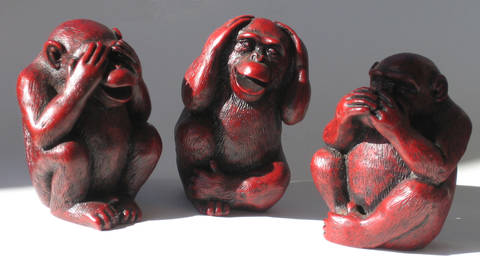
The Three Wise Bonobos: "Do not look at evil, do not listen to evil, do not speak evil" ...but what is evil and what is not varies over time and between cultures, and may be changed by creating a new law with the stroke of a pen.
(Confucius' fourth analect in the series has conveniently been ignored by most folks.)
"私はまだ、セックスと同じくらい徳を愛する男に会ったことがない"
"I have yet to meet a man who loves Virtue as much as he loves sex."
— 孔子 Confucius
なぜ漢字を使うのか?
Why use kanji glyphs?
始める前に、日本語で漢字と呼ばれる中国文字の起源について、少し考えてみてください。今日の日本語の読解にはこれらの文字の理解が必要ですが、コミュニケーションをとる上でそれらは全く必須ではありません。この主張の証拠は、日本や中国、その他の地域で、文字を使わずに口頭でコミュニケーションが行われるたびに、毎日何十億回も示されています。口から漢字の文字を吐き出しながら話す人はいないでしょう?重要なのは、音なのです。
Before you begin, take a moment to think about the origins of Chinese glyphs, called kanji in Japanese. While an understanding of these glyphs is necessary for reading Japanese today, they are completely non-essential in order to communicate. Proof of the foregoing statement is demonstrated billions of times each day, whenever communication is performed orally, spoken without any sort of writing, in Japan, China, and elsewhere. Nobody speaks words while spewing written kanji glyphs from his or her mouth, right? It's the sound that matters.
言語には絵文字のような記号は必要なく、人間が発する音は、英語のアルファベット26文字や、現在日本で一般的に使われている「ひらがな」と呼ばれる46文字の音節文字といった、ごく少数の記号セットを用いて書き表すことができます。たいていの場合、話す際に文字を書く必要は誰にもありません。限られた基本的な文字セットを用いて、発話によって生み出される音を記録すること――これが、他のほとんどの言語の書き方である。ずっと後になって、文字は中国に征服された様々な集団間の、発音に左右されないコミュニケーションを可能にしたが、それが文字が作られた本来の目的ではなかった。では、本来の目的は何だったのだろうか?
Language has no need of pictographic glyphs, with the sounds humans speak instead able to be written using a small symbol set, such as the 26 letters of the English alphabet, or the 46 syllabaries presently common in Japan known as hiragana. No one needs to write anything when speaking, most of the time. Recording the sounds created by speech using a basic, limited set of characters is how most other languages are written. While written glyphs much later enabled communication among various groups conquered by the Chinese without regard to pronunciation, that was not the original purpose for creating the glyphs. So, what was?
いずれにせよ、4万7000もの文字が本当に必要だったとは誰も思わないだろう。特に、学者たちが主張するように、その90%が意味を表すためではなく、発音を示すためだけに使われていたとすればなおさらだ。もしそれが事実なら、他のほとんどの言語と同じように、少数の表音文字を使うほうがはるかに効率的で有用だったのではないか?さらに、専門家たちは、歴史的な変化の過程により、文字の発音がそのいわゆる「表音記号」の発音としばしばわずかに異なるため、本来その目的とされる発音を示すという表音記号の使用は事実上無意味であると主張している。おかしな話ではないか?その説明は巨大な「キャッチ22」であり、ほとんど意味をなさない。古代の賢者たちは、これらの文字を創造するほど賢明でありながら、音を表すための標準的な表音文字のセットを思いつくことはできなかった、と私たちは信じろというのでしょうか?それはまさに信じがたい、つまり信じるに値しない話です。特に、学者たちが主張するように、その90%が本来の意味で一度も使われたことがなかったとすればなおさらです。古代の賢者たちは、明確な目的を持ってこれらの文字を作ったのです。そして当初、それらは書き言葉として全く役に立たないものでした。
In any case, nobody truly needed 47,000 or so glyphs, especially as the scholars claim when 90% of them were not used for their meanings, but were used only for pronunciation. If that were the truth, wouldn't using a small set of phonetic characters have been far more efficient and useful, in the same manner as most every other language? On top of that, the pundits claim that the pronunciation of characters is often slightly different from that of its so-called phonetic indicator due to the process of historical change, making the use of a phonetic indicator virtually useless for pronunciation, which is purportedly its stated purpose. Sound crazy? That explanation is a huge Catch-22, and makes little sense. Are we expected to believe that the ancient sages were clever enough to create these glyphs, but not able to think of a standard set of phonetic characters to represent sounds? That is truly incredible, as in not worthy of belief, especially when 90% were never used for their meaning as the scholars claim. The ancient sages made these glyphs for a deliberate purpose, and originally it was far from any use as a written language.
これらの文字の使用はなぜ、どのように始まったのか、そして元々はどのような目的で使われていたのか?何百年、いや何千年にもわたって文字を創作する以前、そして創作中も、中国の賢人たちは文字を必要とせずに互いに意思疎通を図り、意見を交わすことができたのは明らかだ。文字が始まる前には、当然ながら文字は存在しなかった。賢人たちが文字について語り合ったり、考えを書き留めたりし始めた頃には、文字はまだ発明されていなかった。では、なぜわざわざ文字を作ったのか?中国語の文字の起源を促した知性の火花とは何だったのか?文字はなぜ最初に現れたのか?文字言語のためでなければ、文字はどのような目的で使われていたのか?
Why and how did the use of these glyphs get started, and what purpose did they originally serve? Prior to and while composing glyphs over a period of many hundreds if not thousands of years, Chinese sages obviously were capable of communicating and discussing ideas among themselves without the need of glyphs. Before the beginning of glyphs, there were no glyphs, obviously. Glyphs were not invented yet when the sages began speaking with one another about these glyphs, or to record thoughts by writing. So why bother? What was the spark of intelligence that triggered the origin of Chinese glyphs? Why did glyphs first appear? What purpose did the glyphs serve if not for written language?
グリフの作成プロセスとグリフの分解プロセス
Process of creating glyphs and the process of dissecting glyphs
これらの文字は、文章を構成するために使われるようになるまで、20世紀以上にわたって存在していた。それは、イエスの時代から現在に至るまでの期間よりも長い。では、文章を構成するためではないとしたら、中国の賢人たちはこれほど長い間、文字をどのような他の方法で用いていたのだろうか。多くの学者は、正直に「分からない」と認めている。仮に知っていたとしても、あえて口にしないことを選んでいるのだ。
The glyphs were around for well over 20 centuries before being used to form sentences. That's longer than the time of Jesus until now. So, in what other ways were sages in China using the glyphs for so long, if not to form sentences? Many scholars frankly admit that they do not know, and if they do indeed know, they choose not to say.
一部の学者は、これらの象形文字は当初、知的な訓練として考案されたものであり、賢い人々の間で、他者が絵の背後にある意味を解き明かせるかどうかを試す、一種の頭脳ゲームだったと指摘している。考古学的遺物に見られる最古の例は、すべて単独で存在し、互いに関連しておらず、文を構成してもいません。まるで、作者が骨や貝殻、あるいは陶器の破片に新しい象形文字を刻み、それを仲間たちの前に持ち込み、仲間たちもまた、議論や知的な刺激、そして笑いと酒を交わすための新たな輪を作るために、それぞれが新しい象形文字を持ち寄ったかのようです。文構造を成す最初の既知の組み合わせは、肩甲骨に単一の記号が刻まれた時代よりも数千年も後の時代に遡る。
Some scholars suggest these glyphs were designed first as an intellectual exercise, a challenging game of riddles shared among a clever group of Chinese sages to see if the others could figure out the meaning behind the pictures, mental puzzles to enhance the social mechanics of group dynamics with both wine and humor. Note that the sense of what was humorous thousands of years ago has changed somewhat today, but not entirely. The earliest examples found on archeological artifacts all occur singly, unconnected and not expressing a sentence, as if the creator had inscribed a new glyph on a bone, shell, or piece of pottery and brought it to present before his buddies, in turn, as they all presented their new glyphs for discussion, mental stimulation, and another round of laughter and wine. The first known combinations forming a sentence structure are dated thousands of years later than the era of single glyphs scratched onto scapulae.
All that sex and laughter as entertainment...here is a recent article headline from The Guardian of May 27, 2026:
'Sexy as hell': filthy and hilarious Heated Rivalry parody musical comes to New York
Ha ha ha. Not much has changed.
識字を持つエリート層による知的娯楽(「籀」および「籒」:楽しませる、酒に酔って時間を過ごす)への言及は、他の文化にも強い類似点が見られる。ギリシャの謎かけの伝統、ローマの「アエニグマタ」、中世のケニング、アラビア語のクロノグラム、ヘブライ語のゲマトリア、サンスクリット語の「シュレシャ」(高位の文学的技法としての意図的な多義性)などがそれにあたる。余暇を持っていたあらゆる識字エリート文化は、地位を示すための言葉遊びを生み出してきた。文字体系が定着する以前、商時代の少数の書記階級が図像的な謎解きで楽しんでいたという考えは、決して珍しいことではない。それはまさに、他の地域で同様のエリート層が行ってきたことであり、象形文字が意図的に多義的であるという特徴を説明するものである。もし当初の遊びが多層的な読み方を奨励していたのであれば、その遊びが生み出した成果物には当然ながら多層的な読み方が含まれることになり、後にそれらの成果物が文字体系として用いられる際、その多義性は化石のように受け継がれることになる。主流の教育は、あらゆる書かれた作品に含まれる不快な内容を体系的に和らげるが、それには非常に正当な理由がある。このサイトでは、現代の多くの人々の考え方に合わせるために、中国の文字に関してどのような点が和らげられてきたかを解説する。
The reference to literate-elite intellectual amusement [籀 and 籒: to entertain, be detained by wine] has strong parallels in other cultures. The Greek riddle tradition, the Roman aenigmata, mediaeval kennings, Arabic chronograms, Hebrew gematria, the Sanskrit śleṣa (deliberate polysemy as a high-status literary device). Every literate elite culture that has had leisure has produced wordplay-as-status games. The idea that a small Shang-period scribal class amused itself with graphic riddles before the system congealed into a writing system is not extraordinary; it is exactly what comparable elites have done elsewhere, and explains the polysemous-by-design feature of the glyphs. If the original game rewarded multi-layered readings, then the artefacts the game produced would naturally contain multi-layered readings, and the later use of those artefacts as a writing system would inherit the polysemy as a fossil. Mainstream pedagogy systematically softens uncomfortable content of any written work and does so for very good reasons. This site explains what has been softened with regard to Chinese glyphs in order to fit better with how most folks think today.
漢字グリフにアクセス Access kanji glyphs:
サイトマップ Site Map
検索 Search
学習リスト Study Lists
debunKanji.com is a registered company in Japan with Tōkyō Shōkō Research, Ltd.
Dun & Bradstreet, Inc. D-U-N-S® Number 691266443
グリフの解説はサイトマップ Site Mapから閲覧できる。
登録メンバーには、学習ツールとして スタディ・リスト を管理し、コメントを投稿できる特典がある。
登録 registerにメールアドレスを入力するだけで、14日間の無料アクセスが可能になる。
その後、サイト維持のために少額の月会費を支払って学習を続けることもできる。
あるいは、登録せず、現在と同じようにサイトを使い続けることもできる。
何か問題が発生した場合、またはその他のフィードバックがある場合は、私たちに電子メールを送る。
You may browse the glyph explanations from our Site Map.
Registered members receive the added benefits of maintaining a Study List as a learning tool, and posting comments.
You may
register with simply an e-mail address, enabling 14 days of free access.
After that, you may choose to continue studying for a small monthly fee used to help maintain the site.
Or, never register and continue using the site as you are now.
If you experience any problems or have other feedback, please send us an e-mail.
ソースエンジンとしてのZen Cart (as the Source Engine)
Zen Cartは、製品の代わりにグリフを、メーカーの代わりにストローク数を、ショッピングカートの代わりにあなたの学習リストを表示するように適応されている。このサイトはグリフやその他の商品を販売していない。登録メンバーには、アカウントと学習リストを維持するための月額サブスクリプションを提供している。URLのアドレスバーやリンク先にproducts_id、products_info、manufacturerなどの用語があっても、不審に思う必要はない。
Zen Cart has been adapted to present glyphs in place of products, stroke counts in place of manufacturers, and your Study List in place of the shopping cart. This site does not sell glyphs or any other products. We offer a monthly subscription to maintain an account and Study List for registered members. If you notice terms such as products_id, products_info, manufacturer, and so on within the address bar displaying the URL or as links, there is no need to become dismayed or suspicious.
一般通知および免責事項 General Notice and Disclaimer
debunKanji.comは他のいかなる法人とも提携しておらず、また分析されたグリフの内容として言及された社会問題に対して賛否両論の立場をとっているわけではない。この出版物に掲載されているグリフをデザインしたスタッフ、寄稿者、登録ユーザーはいない。ほぼすべてのグリフは、私たちの誰もが生まれる前に完成している。もしここで紹介されているグリフの要素の説明に同意できなかったり、単に気に入らなかったりしても、気分を害することはない。その代わり、コメントを送り、与えられた意味がなぜ正しくないのか、そしてあなたがどうあるべきだと考えているのかを説明すること。この作品はdebunkanji.comのメンバーの意見を集めたものである。あなたの意見も遠慮なく投稿してほしい:debunkanji
debunKanji.com is not affiliated in any manner with any other legal entities, nor does it assume any position either for or against any of the social issues mentioned as the content of analyzed glyphs. No staff member, contributor, or registered user has designed any glyphs presented in this publication. Virtually all the glyphs were completed prior to any of us being born. If you disagree with, or simply do not like an explanation of the elements of a glyph presented here, don't become offended. Instead, send a comment and explain why the given meanings are incorrect, and what you believe it ought to be. This work is the result of the collective opinions of debunkanji.com members. Feel free to contribute yours: debunkanji
Copyright © 2010-2026 debunKanji.com and others, with all rights reserved.
この出版物のいかなる部分も、他のライセンスが許可する場合を除き、debunKanjiの書面による明示的な許可なく複製または再出版することはできない。許可は不当に保留されることはないので、まずは私たちに尋ねてほしい。ボノボのモデルはいくつかのボノボから提供された。
No portion of this publication may be copied or republished without the expressed written permission of debunKanji, unless other licensing permits. Permission is not withheld unreasonably, so just ask us, first. Bonobo models provided courtesy of some bonobos.
This publication has included material from the MDBG free online English to Chinese dictionary files in accordance with the license provisions of the Creative Commons Attribution-ShareAlike 3.0 License.
This publication has included material from the JMdict (EDICT, etc.) dictionary files in accordance with the license provisions of the Electronic Dictionaries Research Group.
This publication has included material from the Unicode Character Database. Copyright © 1991-2016 Unicode, Inc. All rights reserved. Distributed under these Terms of Use.
